
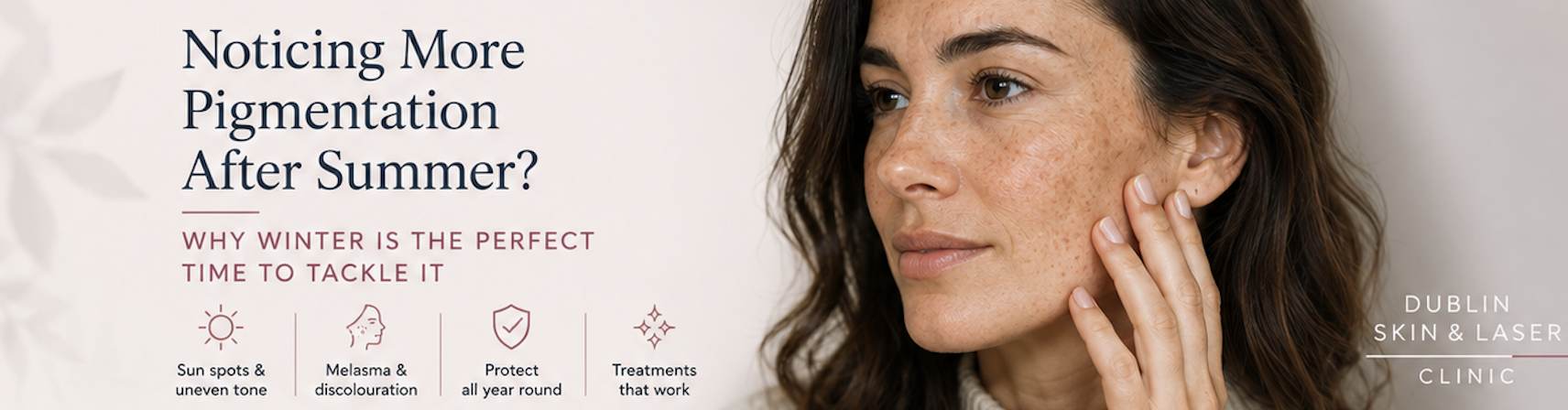
The summer tan may be fading, but you might have noticed something else sticking around.
Small brown spots. Patches of uneven colour. Areas of pigmentation across the cheeks, forehead or upper lip that seem more noticeable than they did a few months ago.
It’s extremely common for people to become more aware of pigmentation as we move into autumn and winter — particularly after months of increased sun exposure.
And while pigmentation can be frustrating, there are effective ways to improve its appearance.
The first step is understanding what you’re looking at.
What Does Pigmentation Look Like?
Pigmentation isn’t always one uniform brown patch.
You might notice:
- Small darker spots or sun spots
- Freckling that has become more pronounced
- Uneven patches of colour
- Dark marks left behind after spots or inflammation
- Areas of the face that look less even in tone
- A generally mottled complexion
Different types of pigmentation can have different causes, which is why correctly assessing it before beginning treatment is so important.
Why Can Pigmentation Seem Worse After Summer?
When skin is exposed to sunlight, it produces melanin as part of its natural protective response.
That extra pigment isn’t always distributed evenly.
Over time, repeated sun exposure can contribute to visible sun spots and uneven pigmentation.
And although Dublin isn’t exactly famous for tropical sunshine, UV exposure still matters — including on cloudy days.
This is one reason pigmentation can become more obvious at the end of summer.
Your tan starts to fade, but areas containing excess pigment may remain.
So Why Talk About Pigmentation in Winter?
For many clients, autumn and winter provide a useful opportunity to focus on pigmentation treatments.
There tends to be less intense sun exposure than during peak summer, which can make it easier to carefully manage sun exposure around certain professional treatments.
That does not mean SPF gets packed away until spring.
Protecting your skin from UV exposure remains one of the most important parts of managing pigmentation and helping prevent new pigmentation from developing.
Which Treatments Can Help Pigmentation?
There isn’t one treatment that’s right for everyone.
At Dublin Skin and Laser Clinic, we assess the type of pigmentation, your skin and your goals before recommending a treatment plan.
Options may include:
IPL Pigmentation Treatment
IPL uses targeted light energy to address areas of unwanted pigmentation.
It can be particularly useful for concerns such as sun spots, uneven pigment and signs of photodamage, while IPL photorejuvenation can also help improve the overall appearance and tone of the skin.
Suitability will always depend on your skin type and the nature of the pigmentation.
Image Brightening Peel
A professionally selected peel can exfoliate the skin and encourage cell turnover, helping to improve the appearance of uneven skin tone and some forms of superficial pigmentation.
Peels can also leave skin looking brighter and fresher, making them popular with people whose main concern is an overall dull or uneven complexion rather than individual dark spots.
Microneedling
Microneedling stimulates the skin’s natural repair response and collagen production and may form part of a treatment plan for concerns including uneven texture and skin tone.
Again, suitability depends on your individual skin and pigmentation.
Hydraderm Facial
Not everyone who comes to us concerned about pigmentation needs an intensive treatment.
If your main concern is dullness and overall uneven tone, a Hydraderm Facial can help cleanse, exfoliate and hydrate the skin to create a fresher, brighter appearance.
Can I Treat Pigmentation With Skincare Alone?
Good skincare can play an important role.
Ingredients such as vitamin C, retinoids and niacinamide are often used within skincare routines designed to improve the appearance of pigmentation and support overall skin health.
But throwing multiple active ingredients at your skin isn’t necessarily better.
In fact, excessive exfoliation or combining too many strong products can irritate your skin and potentially leave it looking worse.
A simple, consistent routine selected for your skin is usually a much better approach.
And whatever else you use, don’t forget broad-spectrum SPF.
When Should You Get Pigmentation Checked?
If a mark or mole is new, changing, irregular, itchy, bleeding or otherwise concerning, don’t simply assume it’s cosmetic pigmentation.
Have it assessed by an appropriate medical professional.
Cosmetic treatments should only begin once we’re confident that we’re dealing with an appropriate cosmetic skin concern.
Start With Your Skin, Not the Treatment
It’s easy to see a treatment on Instagram and decide that’s exactly what you need.
But when it comes to pigmentation, the best results begin with understanding why the pigmentation is there in the first place.
At Dublin Skin and Laser Clinic, we’ll assess your skin, talk through your concerns and recommend the treatment — or combination of treatments — that makes sense for you.
If you’re noticing pigmentation, sun spots or uneven skin tone after summer, autumn and winter can be a great time to book a skin consultation and create your personalised treatment plan.